

Stacking Rings: A Beautiful Way to Tell Your Own Jewellery Story

Stacking Rings: A Beautiful Way to Tell Your Own Jewellery Story
Stacking rings are one of the most versatile and personal ways to wear jewellery. Rather than choosing one single statement ring, stacking rings allow you to build a look across several bands, mixing metals, gemstones, textures and styles to create something completely individual.
Whether worn as a delicate everyday stack or a bold arrangement of vintage and modern pieces, stacking rings have become a much-loved part of contemporary jewellery styling. Their charm lies in their flexibility: they can be changed, added to, rearranged and adapted to suit your mood, outfit or occasion.
What Are Stacking Rings?
Stacking rings are rings designed to be worn together, usually on the same finger, though they can also be spread across several fingers for a more layered look. They are often slimmer than a traditional statement ring, allowing several to sit comfortably together.
A stack might include plain gold bands, silver rings, gemstone rings, eternity bands, wishbone rings, signet styles or shaped rings that fit around a centrepiece. Some stacks are carefully matched, while others are beautifully eclectic, mixing different ages and styles of jewellery.
A Brief History of Stacking Rings
Although stacking rings feel very modern, the idea of wearing multiple rings is far from new. Rings have been worn in groups for centuries, often as symbols of wealth, status, love, faith or family connection.
In the Georgian and Victorian periods, it was common for people to wear several sentimental rings together. Mourning rings, posy rings, keeper rings and gemstone bands were often worn alongside wedding rings or engagement rings. These combinations were deeply personal and told stories about love, memory and identity.
During the Victorian era, jewellery became especially rich in symbolism. Gemstones, flowers, hearts, knots and hands all carried meaning, and many people wore rings not simply for decoration, but as keepsakes. A cluster of rings could represent family, romance, remembrance or social position.
In the Art Deco period of the 1920s and 1930s, rings became more geometric and refined. Slim diamond bands, shaped wedding rings and elegant platinum or gold designs were often worn together. This gave stacking a cleaner, more architectural look.
Today, stacking rings have returned in a wonderfully free and expressive way. Instead of following strict rules, people now mix vintage, antique and contemporary rings to create combinations that feel personal and stylish.
Why Are Stacking Rings So Popular?
One of the main reasons stacking rings are so popular is that they are easy to personalise. A stack can begin with just one ring and grow over time. You might add a ring to mark a birthday, anniversary, new job, friendship, achievement or special memory.
They are also perfect for people who enjoy changing their jewellery. A single ring always looks the same, but a stack can be styled in many different ways. You can keep it simple with two or three fine bands, or create a more dramatic look with colour, texture and sparkle.
Stacking rings also work beautifully with vintage jewellery. Older rings often have character that new jewellery cannot easily copy. A slightly unusual band, a hand-cut gemstone, a textured gold finish or a delicate antique setting can add depth and individuality to a stack.
Mixing Metals
One of the old jewellery “rules” was that metals should match. Today, that rule has largely disappeared. Yellow gold, rose gold, white gold and silver can look beautiful when worn together.
Mixed metal stacking is especially effective because it adds contrast and warmth. A yellow gold band beside a silver gemstone ring can make both pieces stand out. Rose gold can soften a stack, while white gold or platinum can add brightness.
For a balanced look, it often helps to repeat a metal somewhere in the stack. For example, a silver ring at the bottom and top, with gold in the middle, can make the combination feel intentional rather than random.
Adding Gemstones
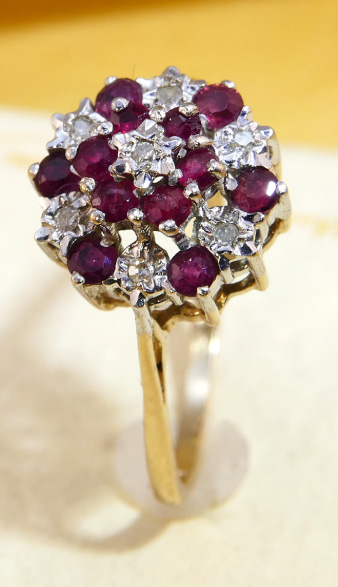
Gemstone stacking rings are a lovely way to introduce colour and meaning. Sapphires, Rubies, Emeralds, Garnets, Amethysts, Opals, Turquoise and Diamonds all bring a different feeling to a ring stack.
Birthstones are particularly popular in stacking rings. A person might wear their own birthstone, their partner’s, their children’s, or stones connected to special months and memories. This makes the stack feel more sentimental as well as decorative.
Coloured stones can also be used simply for beauty. Blue Sapphires add depth, Garnets bring warmth, Emeralds feel rich and classic, while Opals and Moonstones offer a softer, more romantic glow.
Texture, Shape & Style
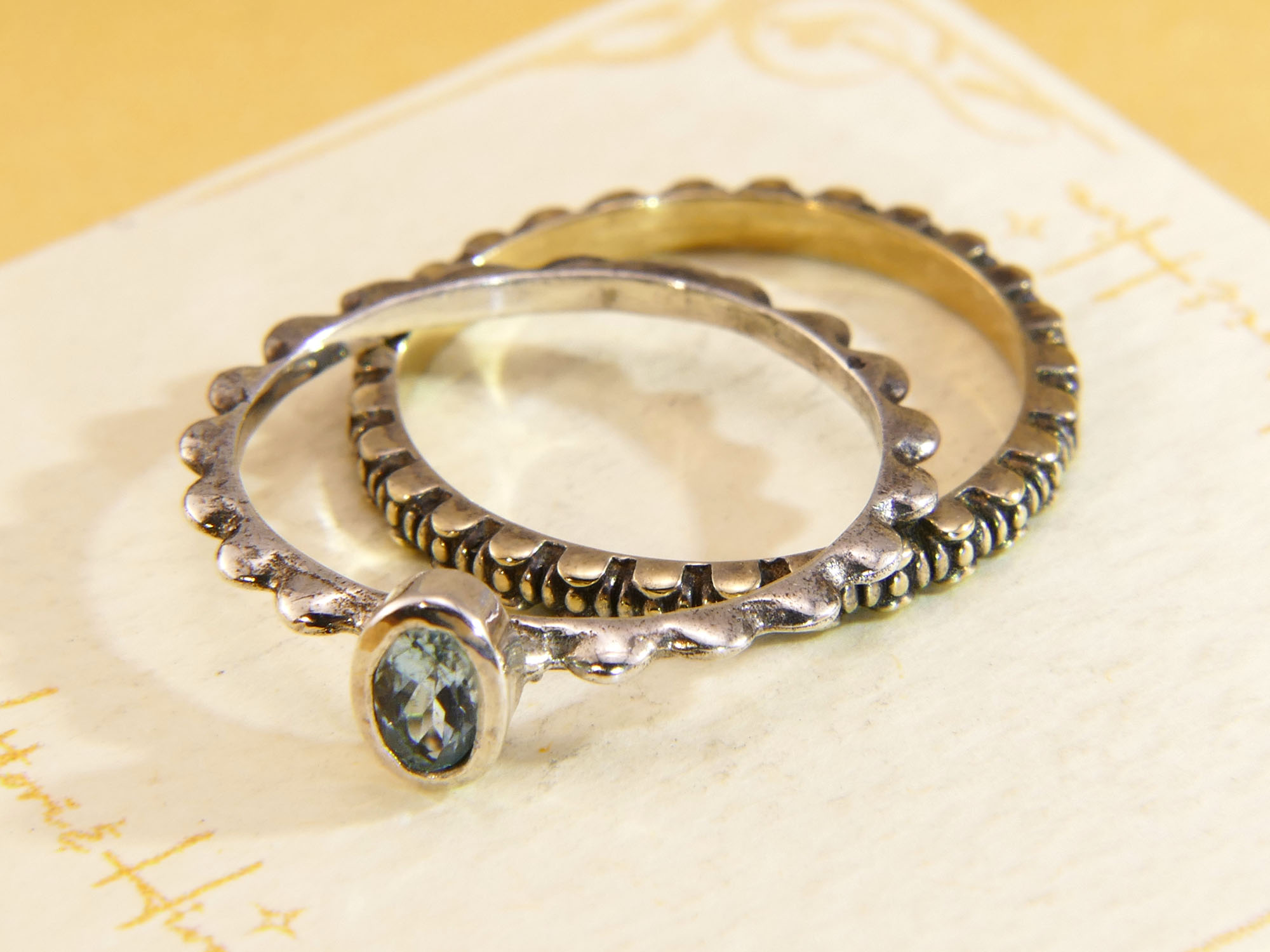
A good ring stack is not only about colour. Texture and shape are just as important. A plain polished band can look wonderful next to a twisted rope ring, a beaded band, a chevron ring or a carved vintage design.
Wishbone and V-shaped rings are especially useful for stacking because they can sit neatly around raised gemstone settings. Curved or fitted bands can frame a solitaire ring or cluster ring, making the main ring look even more special.
A stack with too many similar rings can sometimes look flat, while a stack with varied shapes and textures feels more interesting. The best combinations often include a mixture of plain, patterned and gemstone-set rings.
How to Style Stacking Rings
There are no strict rules, but there are a few helpful tips.
Start with a central ring you love. This might be a gemstone ring, a wedding ring, an eternity band or a favourite vintage piece. Then build around it with slimmer bands or complementary colours.
Think about comfort as well as appearance. Rings that are too thick or too many in number may feel tight, especially as fingers naturally change size during the day. Slimmer bands are often easier to wear in multiples.
It is also worth considering height. Very high settings may not sit comfortably beside other rings, while low-profile bands are usually easier to stack. This is why eternity rings, narrow gold bands and slim gemstone rings work so well.
Vintage Stacking Rings
Vintage rings are perfect for stacking because they offer variety, charm and individuality. Unlike modern matching sets, vintage rings often have small differences in design, finish and proportion. These differences can make a stack feel collected rather than manufactured.
A Victorian gold band, an Art Deco Diamond ring, a mid-century gemstone band and a simple silver ring can work beautifully together. The mixture of periods gives the stack character and a sense of history.
Choosing vintage stacking rings is also a more sustainable way to enjoy jewellery. Rather than buying newly mined materials, you are giving existing pieces a new life and creating a style that is entirely your own.
A Personal Collection Over Time
Perhaps the loveliest thing about stacking rings is that they do not need to be completed all at once. A ring stack can grow slowly over the years. Each addition can mark a moment, a memory or simply a piece you fell in love with.
This makes stacking rings feel different from many other jewellery trends. They are not only fashionable; they are personal. Each stack can become a miniature collection, worn every day and built around the person who wears it.
Final Thoughts
Stacking rings are a beautiful blend of style, sentiment and self-expression. They allow you to mix old with new, gold with silver, plain bands with gemstones, and delicate designs with bolder pieces.
Whether you prefer a simple stack of fine gold bands or a colourful mix of vintage gemstone rings, stacking rings offer endless possibilities. They are a wonderful way to wear jewellery that feels personal, meaningful and full of character — one ring at a time.