

Parti-Sapphires: Nature’s Most Unique Sapphires

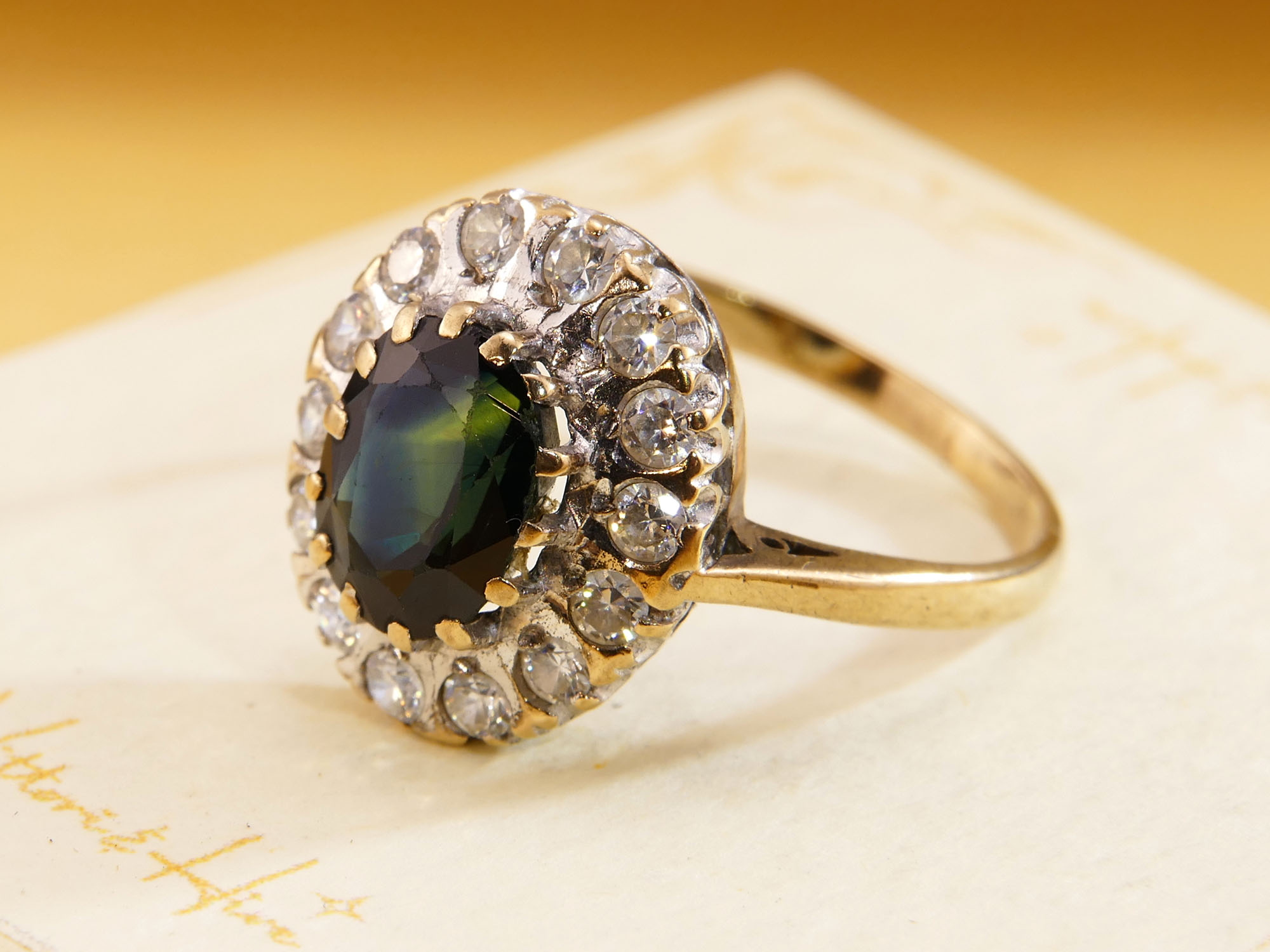
Parti-sapphires are among the most fascinating and visually distinctive gemstones in the world. Unlike traditional sapphires that display a single uniform colour, these rare stones exhibit two or more colours within the same gem—most commonly Blue, Green, and Yellow. Each stone is entirely unique, making them highly desirable for collectors and those seeking something truly one-of-a-kind.
What Do Parti-Sapphires Look Like?
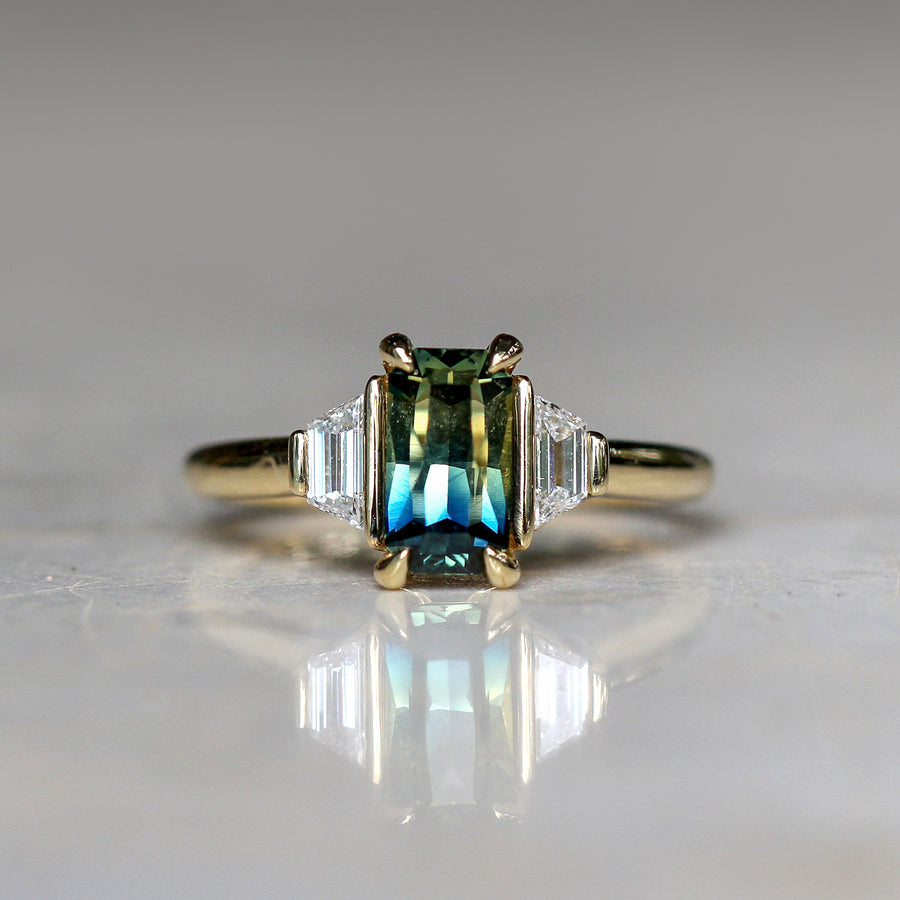 Parti-sapphires display striking natural colour zoning, where different hues appear in distinct sections or blend seamlessly together. Some stones show sharp divisions between colours, while others have soft, painterly transitions.
No two parti-sapphires are ever identical—this individuality is a key part of their charm.
How Are Parti-Sapphires Formed?
Parti-sapphires form deep within the Earth under intense heat and pressure, just like all sapphires. However, what sets them apart is the uneven distribution of trace elements, primarily Iron and Titanium, during crystal growth.
As the crystal develops:
- Variations in chemical composition occur
- These changes create zones of different colours
- The result is a single crystal with multiple hues
This natural “interruption” in formation is what gives parti-sapphires their signature multi-colour appearance.
Where Are Parti-Sapphires Found?

Parti-sapphires are found in a few key locations around the world:
- Australia (Queensland & New South Wales) – The most famous source, producing classic Blue-Green-Yellow combinations
- Montana, USA – Known for softer, pastel parti colours
- Madagascar – Increasingly important source with vibrant stones
Australian parti-sapphires are particularly prized and dominate the market.
How Rare Are They?
Parti-sapphires are significantly rarer than standard single-colour sapphires. While sapphires themselves are not uncommon, stones with natural, attractive multi-colour zoning are much harder to find.
Key rarity factors include:
- Balanced and visually appealing colour distribution
- Strong saturation in multiple colours
- Clean clarity with minimal inclusions
Because of this, high-quality parti-sapphires are considered niche but increasingly sought-after.
When Were Parti-Sapphires Popular in Jewellery?
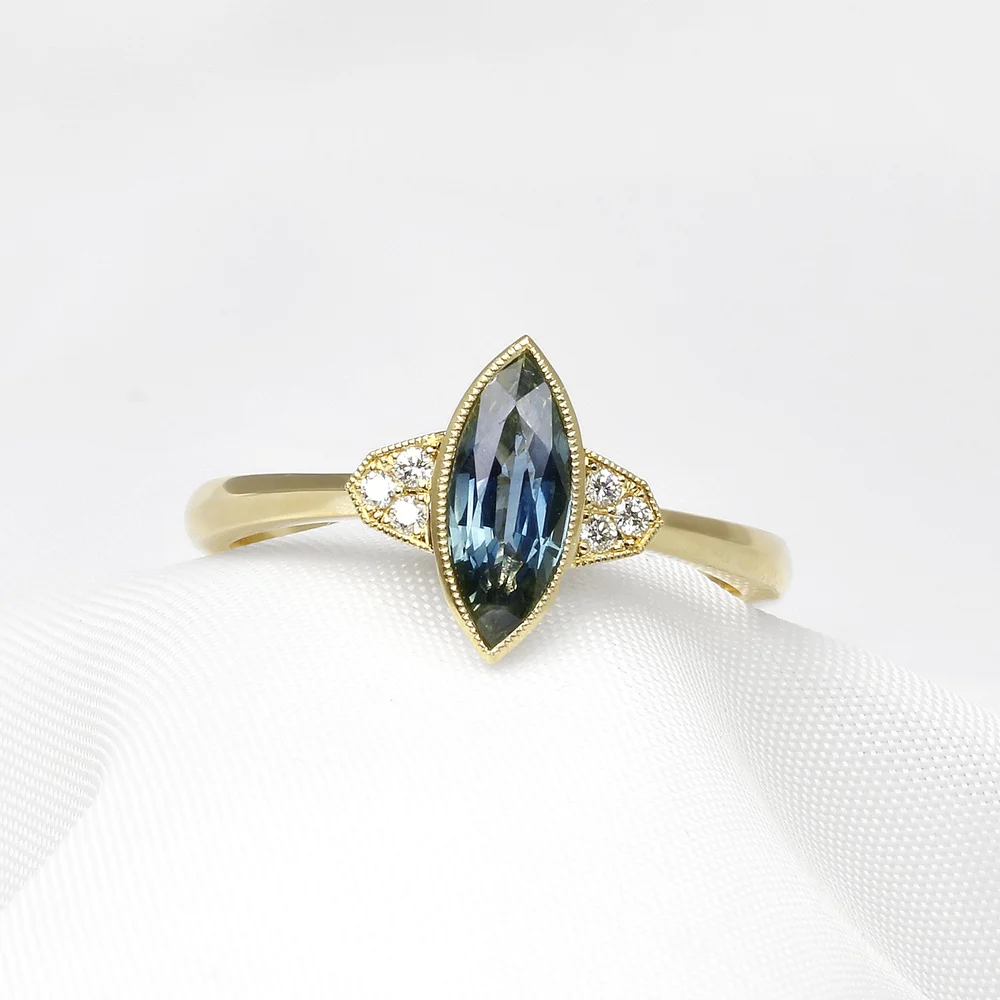
Historically, parti-sapphires were not widely used in traditional jewellery. Classic jewellery trends favoured uniform gemstones—deep Blue sapphires, for example.
However:
- They began gaining attention in the late 20th century
- Popularity surged in the 2000s and 2010s
- Today, they are especially favoured in bespoke and alternative engagement rings
Modern buyers value individuality, sustainability, and natural beauty—all qualities that parti-sapphires embody.
Price Per Carat
Parti-sapphire pricing varies widely depending on colour, clarity, size, and origin. As a rough guide:
- Lower quality / muted colours: £100–£300 per carat
- Mid-range stones (good colour zoning): £300–£800 per carat
- High-quality stones (vivid, balanced colours): £800–£2,000+ per carat
Exceptional stones with striking, well-defined colour patterns can exceed this range, particularly if sourced from Australia.
Interestingly, parti-sapphires can sometimes offer better value than fine single-colour sapphires, despite their rarity, due to lower mainstream awareness.
Why Choose a Parti-Sapphire?
Parti-sapphires are perfect for those who want:
- A completely unique gemstone
- Natural, unenhanced beauty
- A conversation-starting piece of jewellery
- A more ethical and often traceable origin (especially Australian stones)
They challenge the idea that gemstones must be uniform—and instead celebrate nature’s unpredictability.