

Sapphire Colour & Grading

Sapphires have captivated jewellers and collectors for centuries, admired not only for their durability but also for their extraordinary range of colours. While many people associate sapphires with deep royal blue stones set in engagement rings and heirloom jewellery, the truth is that sapphires occur in almost every colour of the rainbow. Understanding how these gemstones are graded for colour is essential for appreciating their beauty and value.
What Determines Sapphire Colour?
Sapphire is a variety of the mineral corundum, composed primarily of aluminium oxide. Trace elements within the crystal structure are responsible for producing the gemstone’s colour. For example, iron and titanium create the classic blue sapphire, while chromium can produce pink tones. Other trace elements can result in yellow, green, orange or violet sapphires.
Unlike some gemstones where clarity or size may dominate value considerations, colour is the single most important factor when grading sapphires. Gemmologists evaluate three key aspects of colour: hue, tone and saturation.
Hue: The Basic Colour
Hue refers to the primary colour seen in the sapphire. Blue is the most famous and traditionally most valuable hue, but sapphires are also found in pink, yellow, green, purple, orange and even colourless varieties.
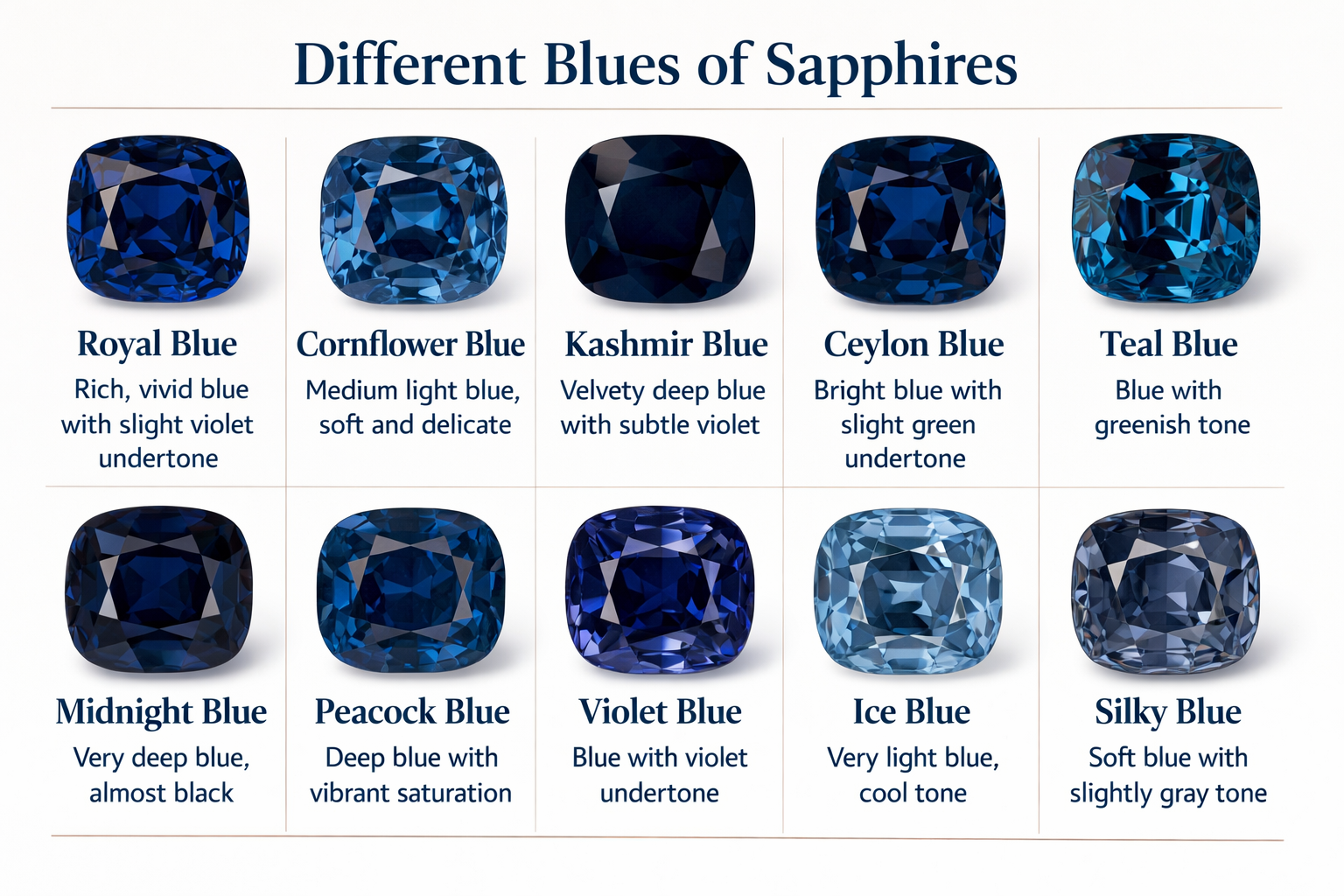
Many sapphires display secondary hues as well. A blue sapphire, for instance, may show slight violet or green undertones. These secondary hues can significantly influence desirability. In fine blue sapphires, a subtle violet component is often preferred, whereas strong greenish undertones tend to reduce value.
Tone: Lightness or Darkness
Tone describes how light or dark a sapphire appears. It is usually graded on a scale from very light to very dark.
The most desirable sapphires typically fall within the medium to medium-dark tone range. Stones that are too light can appear washed out, while overly dark sapphires may lose brilliance and appear almost black under certain lighting conditions.
The famed “royal blue” sapphires from Sri Lanka or Kashmir often exhibit an ideal tone that balances richness with brightness.
Saturation: Strength and Purity of Colour
Saturation measures the intensity or vividness of the colour. A sapphire with strong saturation displays a pure, vibrant colour without appearing greyish or brownish.
Highly saturated stones are generally the most valuable because their colour appears rich and lively. However, saturation must remain balanced with tone; an intensely saturated stone that is also very dark may not display its colour well.
Fancy-Coloured Sapphires
While blue sapphires dominate public perception, fancy-coloured sapphires have grown increasingly popular among collectors and designers. Pink, yellow, peach and teal sapphires offer distinctive alternatives to traditional blue stones.
Among the rarest is the celebrated Padparadscha sapphire, whose name derives from the Sinhalese word for “lotus blossom”. These stones display a delicate blend of pink and orange hues that gemmologists carefully evaluate to ensure the colour balance is correct.
Why Colour Grading Matters
Colour grading provides a consistent way for gemmologists, jewellers and collectors to communicate about sapphire quality. Two stones of the same size and clarity can vary dramatically in value depending on their colour characteristics.
For vintage and antique jewellery, colour grading also helps explain why certain historical pieces were so prized. Georgian and Victorian jewellers, for example, often selected sapphires with lively colour and balanced tone, even when cutting styles were less precise than modern standards.
Appreciating Sapphire Colour
Ultimately, while gemmological grading systems provide useful frameworks, the beauty of a sapphire still comes down to personal preference. Some collectors prefer deep inky blues, while others favour lighter cornflower tones or unusual teal varieties.
What remains constant is the fascination with colour itself. From the legendary Kashmir blues to delicate pastel sapphires found in vintage rings, these gemstones continue to captivate with their extraordinary palette.
Understanding how colour grading works allows collectors and jewellery lovers to look more closely at each stone—and appreciate the subtle differences that make every sapphire unique.